
Back Pain from Desk Work & Sitting
Stiff, sore back after a day at your desk? Your body has adapted to the chair. We need to balance the books.
Most of us spend our days sitting: at a desk, in the car, on the couch. Your body is incredibly good at adapting, so it adapts to that position. At Oak Osteopathy in Cork, and online, I help people undo those adaptations and build a body that can handle modern life, and still feel good doing the things they love.
⭐ Rated 5.0 from 200+ Google reviews · 📍 Ballintemple, Cork · 💻 Online worldwide
⭐⭐⭐⭐⭐
I started visiting Oak Osteopathy because of a recurring lower back pain that was really affecting my quality of life. Working with Luke has made a huge difference… my whole body feels stronger and more mobile thanks to his guidance.
What sitting does to your body
Your body adapts to how you use it. Spend eight or more hours a day sitting, and it slowly reshapes itself around the chair:
- The front of your body tightens. Your hip flexors sit in a shortened position all day, and your chest and the front of your shoulders round forward.
- Your upper back works overtime. As your head and shoulders drift forward, the muscles in your upper back have to hold the weight of your upper body up. It’s like holding a plank all day. They harden and get sore, and you end up with “nerd neck”.
- Your glutes switch off. You’re sitting on them all day, compressed, with less blood flowing through them, so they weaken.
- Your lower back picks up the slack when you finally stand up, lift, or go for a run.
This isn’t your fault. It’s what modern, sedentary life does to everyone. But it means we have to deliberately balance the books.

How I work with desk-related back pain
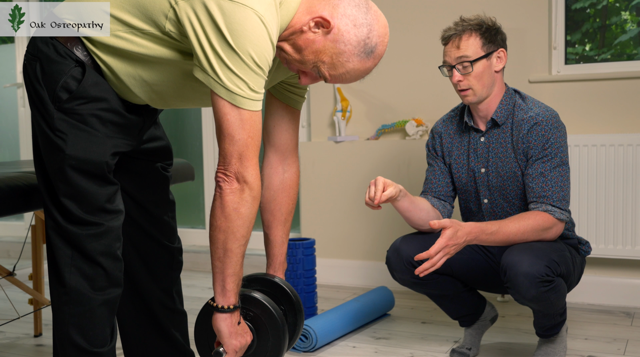
01. Untie the knots
We open up what sitting shortens: the front of the hips, the chest and the front of the shoulders. And we free up the upper back that’s been holding you up all day.
02. Wake up what’s been switched off
We rebuild strength in your glutes and the muscles that support your posture, so your lower back isn’t doing all the work.
03. Rebuild all the movements
Your spine is designed to bend forward, arch back, side-bend and rotate. Desk life uses almost none of that. We bring it all back, from gentle to strong.
04. A routine that fits your workday
You leave with a short, realistic routine that fits around work, so you’re looking after yourself every day, not just when it hurts.
Is there a “perfect posture”?
Not really. The problem isn’t sitting in one particular way. It’s staying in any position for hours, day after day, without anything to balance it out. The best posture is your next one. Combine regular movement through the day with a body that’s strong and mobile in every direction, and sitting stops being a problem.
What the research says
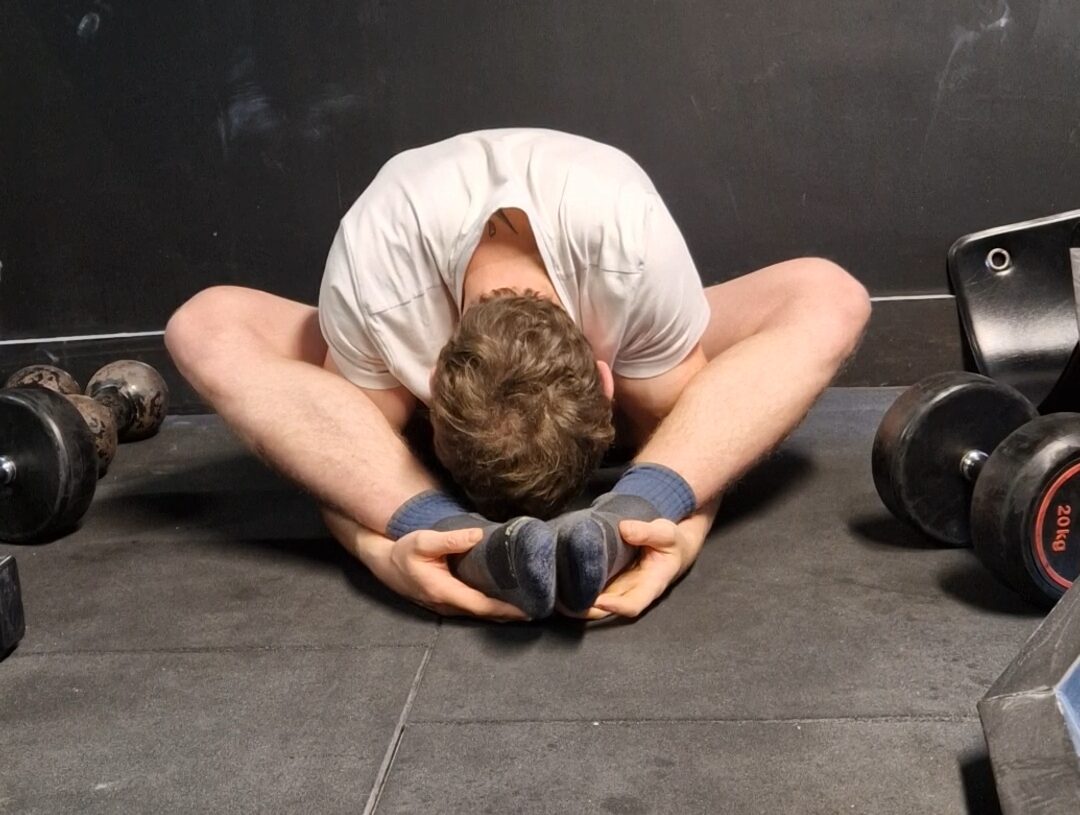
- Stiffness, not movement, is the problem. People with back pain tend to move their spine less and more slowly (Laird et al., 2014), and moving more goes hand in hand with recovery (a meta-analysis in the European Journal of Pain).
- One posture isn’t the enemy. Long-term cyclists spend years bent forward, and their discs tend to look healthier, not worse (Belavý et al., 2019). What matters is how much you move overall.
- Exercise works. a Cochrane review of 249 trials found exercise reduces chronic back pain compared with usual care or no treatment.
- The best exercise is the one you’ll keep doing. Flexibility work was among the best-performing types, but the authors’ main advice was to pick exercise you enjoy and stick with it (Hayden et al., 2021).

What happens at your first appointment?
Your first session is a full 60 minutes, in the clinic in Ballintemple or online over Zoom. We talk through your history, assess how your back moves through bending, extending, side bending and rotation, and start rebuilding straight away. You leave knowing what’s going on, what to do next, and with exercises that suit where your back is right now.
60-minute Initial Consultation: €140
Working from home or not in Cork? Online coaching works brilliantly for desk-related back pain. We can even look at your actual work setup on camera.
Desk work and back pain FAQs
Do I need a standing desk or a new chair?
They can help, but they’re not the fix. Standing all day has its own problems. What matters most is moving regularly and having a body that can cope with long days.
How long will it take?
Many people notice a difference within a few weeks of doing their routine. Long-standing stiffness takes longer to fully rebuild, which is why I often recommend the 12-session Long Course.
I get neck pain too. Can you help?
Yes. Neck and upper back pain from desk work usually come from the same pattern, and we work on it together.
Ready to balance the books?
Start with a 60-minute Initial Consultation: €140
⭐ 200+ five-star Google reviews · 📍 Ballintemple, Cork · 🌍 Online worldwide