
Disc Bulge & Herniated Disc Treatment in Cork
Been told you have a disc bulge or a herniated disc? It’s not the end of your active life. I’ve been there myself.
A disc diagnosis can be frightening. Most people are told to rest, avoid bending and never lift anything heavy again. In my experience, that advice keeps people stuck.
At Oak Osteopathy in Ballintemple, Cork, and online, I help people with disc bulges and herniations calm their symptoms, then progressively rebuild movement and strength so they can get back to work, training and life.
⭐ Rated 5.0 from 200+ Google reviews · 📍 Ballintemple, Cork · 💻 Online worldwide
⭐⭐⭐⭐⭐
I had a herniated disc when I was 20, twelve years ago, and have struggled with my back ever since… in just three months, I’m now pain free… three months ago, I would never have believed I could be where I am today.
My own herniated disc
I’ve had a herniated disc. I spent about two weeks in bed and three months unable to work. At the time I was backpacking around Latin America and helping to renovate a house.
What got me back wasn’t rest. It was movement. I exercised my back every day in pain-free ranges of motion, using everything I’d learned so far. That kept blood flowing through the area. I listened to my pain signals and respected them, worked within what I could do each day, and gradually did a little more. It healed far quicker than I expected, and within about three months I was back working on the renovation.
That experience shaped everything about how I work with disc problems today.

What is a disc bulge or herniation?
Between each of the bones in your spine is a disc: a tough outer ring with a softer centre. A bulge is when the disc pushes out beyond its normal edge. A herniation (sometimes called a “slipped disc”) is when some of the softer centre pushes through the outer ring. If it irritates a nearby nerve, you can get pain, pins and needles or numbness down the leg (sciatica).
Two things are worth knowing:
- Disc changes are very common, including in people with no pain at all. A scan result doesn’t decide your future.
- Discs can heal. Research shows many disc herniations settle, and some even shrink, over time. The aim is to give your back the right conditions to do that, and to rebuild it so it’s stronger than before.
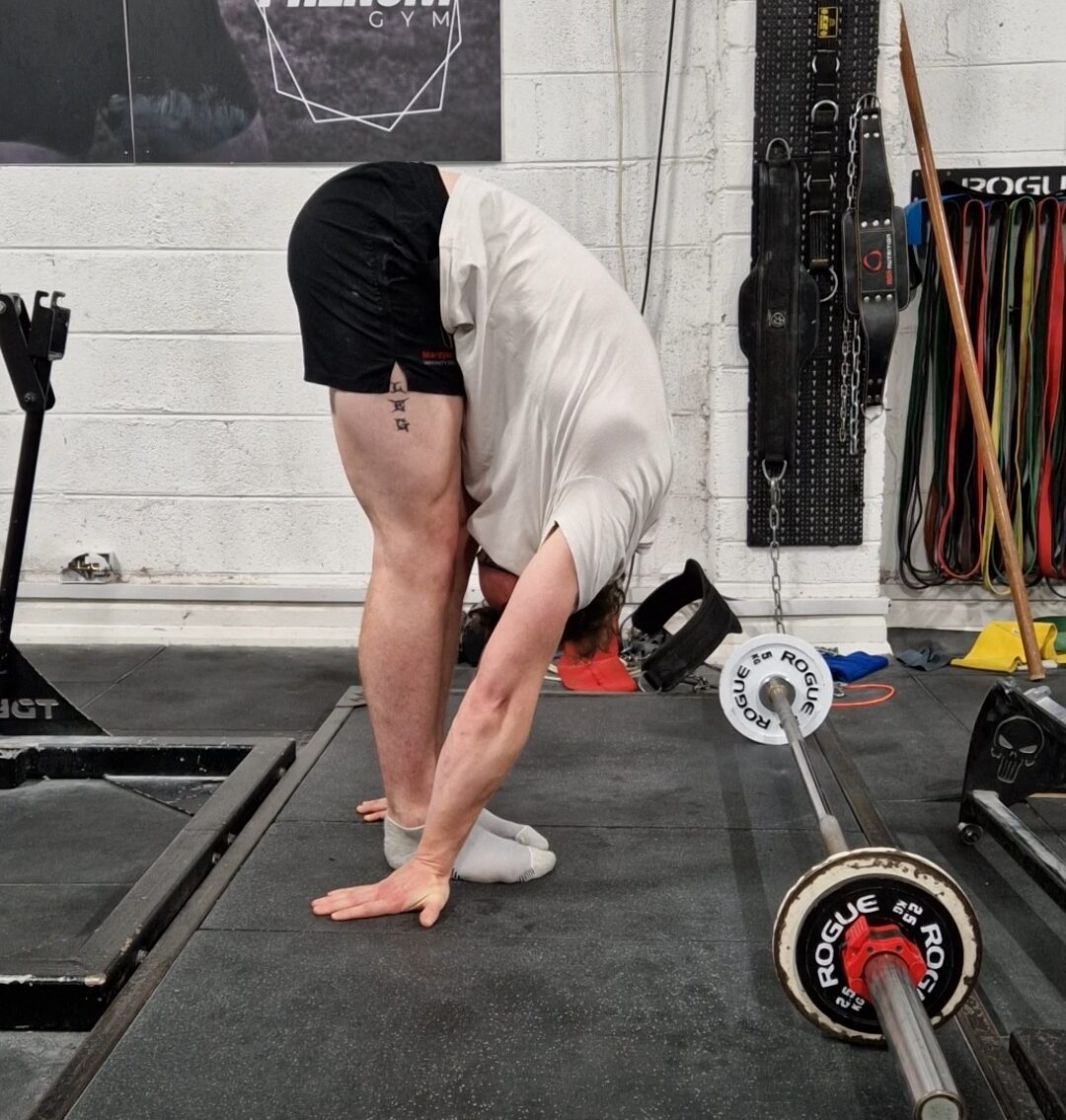
How I work with disc problems
01. Respect the pain, but keep moving
We find positions and movements that ease your symptoms, and stay within them. Gentle, regular movement keeps circulation going and stops your back from stiffening up and losing strength.
02. Rebuild the main movements of the spine
Your spine bends forward, arches back, side-bends and rotates. We find the smallest, safest version of each movement that your back tolerates today, and build from there.
03. Progressive overload
Week by week, we add a little more range, a little more load, a little more confidence, until your back can handle the lifting, bending and carrying your life demands.
04. Learn to look after it yourself
You leave understanding what flares your back and what settles it, so you’re not dependent on anyone, including me.
When to get urgent medical help
Most disc problems aren’t dangerous, but go to your GP or the Emergency Department straight away if you have:
- Numbness around your groin, genitals, buttocks or inner thighs
- New difficulty passing urine, or loss of bladder or bowel control
- Weakness in your leg or foot that’s getting worse
- Symptoms in both legs at the same time
- Back pain with fever, unexplained weight loss or feeling generally unwell
What the research says
The science on disc herniations is far more hopeful than most people are told.
- Most herniations shrink on their own. Across 31 studies and over 2,200 patients, about 70% of herniations shrank with conservative care, mostly within 6 months. Larger herniations were actually more likely to shrink (Zou et al., 2024).
- Your body actively clears them. Immune cells break down and remove the herniated material, which is how they heal (a 2024 systematic review of 34 studies).
- Disc changes are normal. In people with no back pain at all, disc bulges show up on scans in about 30% of 20-year-olds, rising to 84% of 80-year-olds (Brinjikji et al., 2015).
- Exercise helps. Exercise reduced back and leg pain and improved quality of life in people with disc herniations (Du et al., 2025).
The honest bit: exercise hasn’t been shown to change how a disc looks on an MRI (Owen et al., 2020). What it changes is how strong, mobile and confident you are, and that’s what gets you back to your life while your disc heals.
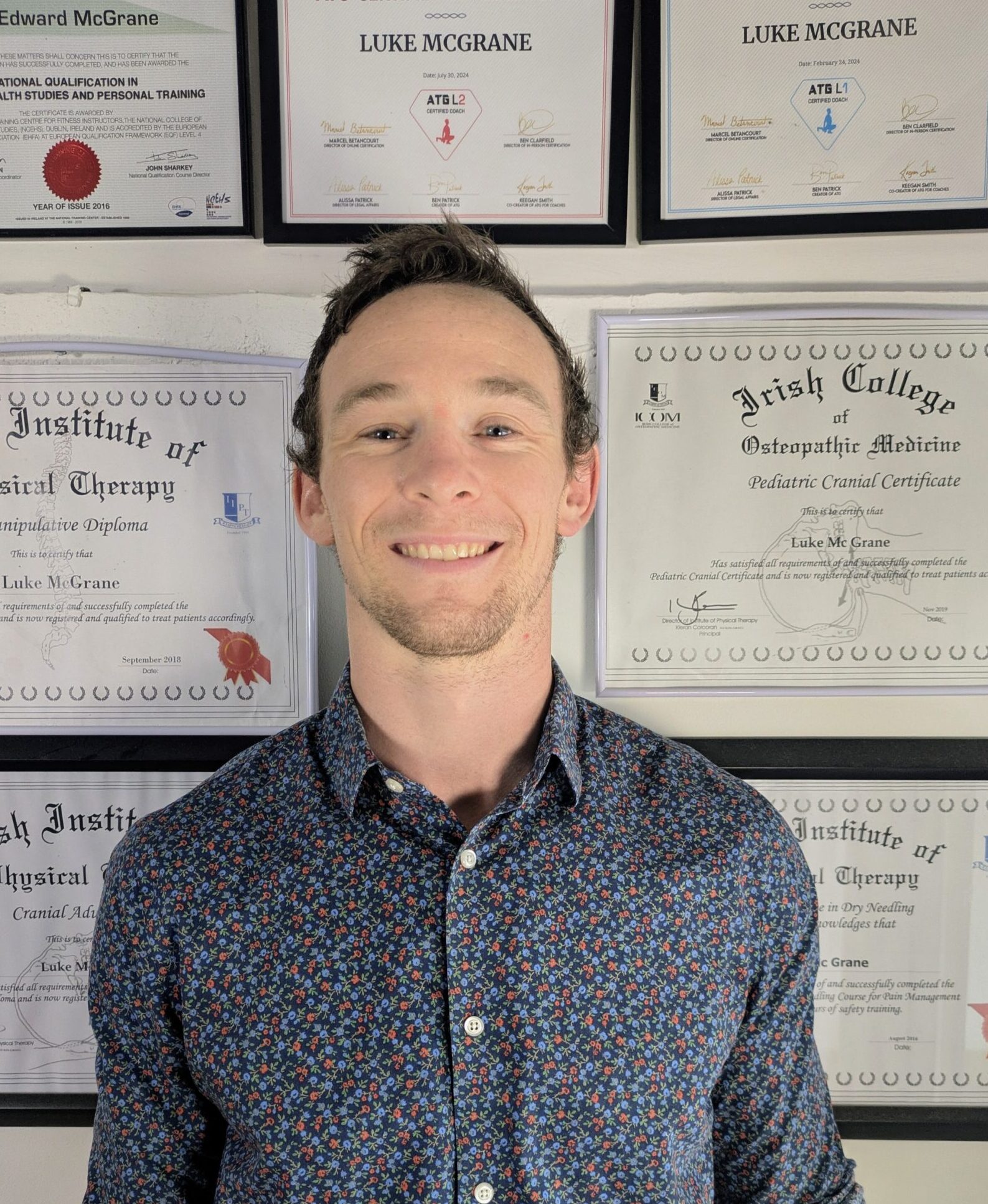
What happens at your first appointment?
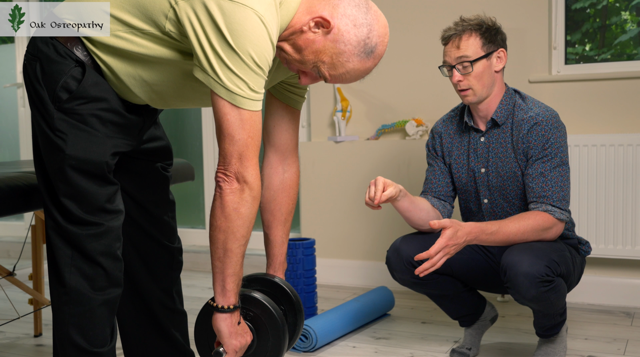
Your first session is a full 60 minutes, in the clinic in Ballintemple or online over Zoom. We talk through your history, assess how your back moves through bending, extending, side bending and rotation, and start rebuilding straight away. You leave knowing what’s going on, what to do next, and with exercises that suit where your back is right now.
60-minute Initial Consultation: €140
Not in Cork? I work with people all over Ireland and around the world through one-to-one online coaching. Same assessment, same approach, same results. Many of my 200+ five-star reviews are from online clients.
Disc bulge FAQs
Should I rest a herniated disc?
A day or two of taking it easy during a bad flare-up is fine. But long periods of rest usually leave you stiffer, weaker and more afraid to move. Gentle movement within what your body tolerates is usually the better path.
Will I ever be able to lift again?
For most people, yes. I deadlift and train heavy myself after a herniated disc. We build back towards lifting progressively, starting from where your back is today.
Do I need surgery?
Most people with a disc bulge or herniation don’t. If anything in your assessment suggests you need a specialist opinion, I’ll tell you and point you in the right direction.
Do I need an MRI before coming in?
Usually not. If you have scans or reports already, bring them and we’ll go through them together.
Ready to rebuild your back?
Start with a 60-minute Initial Consultation: €140
⭐ 200+ five-star Google reviews · 📍 Ballintemple, Cork · 🌍 Online worldwide