
If you’ve just been told you have a herniated disc, your first instinct is probably to lie down and not move a muscle. I get it. The pain can be frightening, and it feels like moving might make things worse.
Here’s my honest answer: don’t cause yourself more pain, but don’t stop moving.
What happened when I herniated my disc
I’ve been there. While I was backpacking in Latin America and helping renovate a house, I herniated a disc. For the first three days I could barely get out of bed, and I couldn’t work for three months.
But after those first few days, I didn’t just lie there waiting for it to go away. Every day, I moved my back in every direction I could, as long as it didn’t cause pain. Bending forward, arching back, side bending, twisting. Sometimes I had to support my hands on a table or the wall. Every hour I got up and walked around.
The key was finding where my limits were each day and working right up to them, without pushing into pain. And every day, those limits got a little smaller. Bit by bit, I rebuilt my movement.
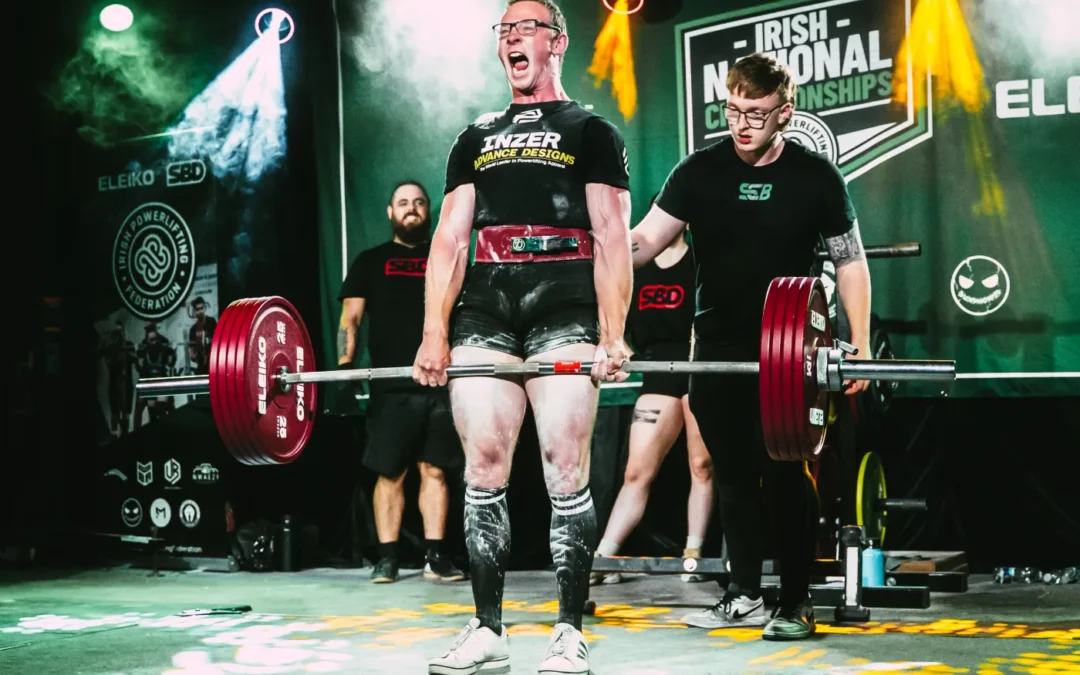
Years later I was deadlifting 225kg at a Cork powerlifting competition. That disc didn’t end anything. It started how I work with every client today.
What the research says about rest
Bed rest used to be the standard advice for back pain. That changed when research showed that long spells in bed can weaken muscles and leave you worse off.
A Cochrane review comparing advice to rest in bed with advice to stay active found that for people with sciatica, there was little or no difference in pain between the two (Cochrane, Dahm et al.). So rest doesn’t speed recovery, and staying active is at least as good while keeping you strong and moving.
That’s why I get my clients up and moving, carefully, from day one.
Can a herniated disc heal?
This one gets argued about a lot. My belief is yes: your discs are living, adapting tissue, just like the rest of your body.
The research backs this up more than most people realise. A 2020 review of 38 studies found that 63% of herniations treated without surgery shrank on follow-up scans (Wang et al., 2020). Larger herniations were actually more likely to shrink than small bulges (Rashed et al., 2023).
One honest caveat: what a scan shows doesn’t always match how you feel. Plenty of people have disc bulges on a scan and no pain at all. That’s why I focus on what you can do, not on the picture.
What actually rebuilds your back
Here’s what I focus on with every disc client:
- Don’t add pain. Move every day, but stay within what your back can tolerate today.
- Move little and often. Get up and walk every hour. Move your spine in all four directions: bending forward, arching back, side bending and rotation.
- Expand your limits. As each range gets easier, take it a bit further.
- Get strong in your most vulnerable positions. This is the big one. A rounded back under load is where most people feel at risk. When the muscles around your spine are strong in those exact positions, they take the load off your discs.
I won’t promise to make your back bulletproof. Nobody can. But you can rebuild it so it’s strong, mobile and ready for lifting, playing with your kids and getting on with life.
When to get checked urgently
Get medical help straight away if you have numbness around your groin or inner thighs, new trouble passing urine or controlling your bladder or bowels, or weakness in your leg that is getting worse.
Want help rebuilding your back?
I work with disc injuries in my clinic in Ballintemple, Cork, and online with clients anywhere in the world. Read more about how I work with disc bulges and herniations, or book your initial consultation below.
👉 Book your initial consultation
Luke McGrane, osteopath and strength coach, Oak Osteopathy